

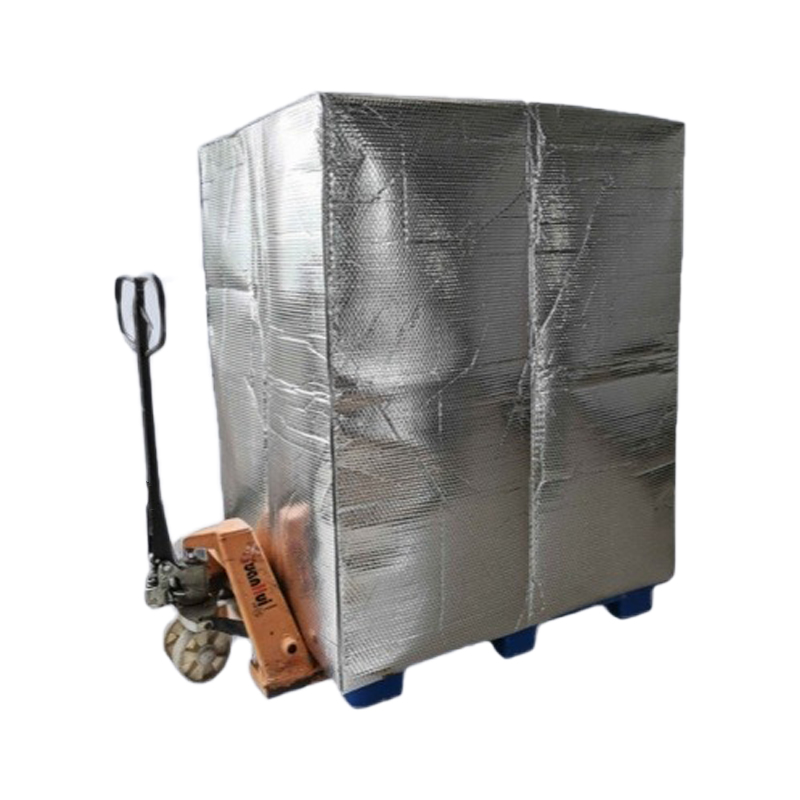
Designed to provide temporary thermal insulation for palletized cargo, insulated pallet covers help maintain stable temperatures when products are exposed to uncontrolled environments such as airport tarmacs, loading docks, warehouses, and last-mile distribution points. By reducing heat gain and heat loss, these covers play a critical role in minimizing temperature excursions throughout the supply chain.
Manufactured using multi-layer insulating materials including aluminum foil, EPE foam, bubble insulation, and non-woven fabrics, insulated pallet covers effectively reflect radiant heat while slowing conductive heat transfer. Their lightweight and flexible structure allows for quick installation over standard pallets without adding significant weight or requiring additional handling equipment.
Industry users report that insulated pallet covers are especially valuable in pharmaceutical, food, and chemical logistics, where strict temperature compliance is essential. In pharma and vaccine distribution, pallet covers offer an added layer of protection during airport handling and cross-docking, while in food and fresh produce transport, they help preserve quality and extend shelf life.
Another key advantage driving adoption is reusability. Compared with single-use insulated packaging, pallet covers can be reused for multiple shipping cycles, supporting sustainability goals while reducing overall packaging costs. Many suppliers also offer customized sizes, closure systems, and branded designs to meet specific operational requirements.

With increasing regulatory pressure on temperature control and sustainability, insulated pallet covers are emerging as a practical and scalable solution for companies seeking to strengthen cold chain integrity without relying solely on active refrigeration systems.